Tagpersonal growth

The Creed of Rational Virtuism – Thinking Clearly. Living Well. Caring Deeply.

We hold that Wisdom is the highest faculty of the human spirit; the union of clear thought, disciplined conscience, and lived understanding. Through wisdom, the individual perceives truth, acts with integrity, and stewards creation with purpose. Every person bears the sacred duty to seek wisdom, to test illusion against reality, and to act not by impulse or imitation, but by discernment and understanding. Wisdom demands humility before truth and courage in its defense.

Article I – Wisdom: The Light That Orders the Soul

We affirm that Wisdom is the light of God within the soul, the union of reason and conscience made whole through understanding. Wisdom is not mere knowledge, but the harmony of truth and virtue expressed through action. It guides judgment beyond impulse, aligns thought with reality, and tempers strength with humility. To live wisely is to act with clarity of mind, purity of motive, and reverence for creation. Wisdom requires care of the self, for clarity of mind and endurance of spirit are necessary to think rightly and live well.

Article II – Virtue: The Discipline of Self-Governance

We hold that Virtue is the act of self-governance in harmony with truth, the will to live neither as master nor slave, but as a conscious being accountable for one’s own thought and deed. Virtue demands responsibility, not obedience; discipline, not submission. The righteous man bends his knee to no idol, for his reverence is reserved for truth alone, and his joy springs from the integrity of his own soul. Each person is a rational soul, not a means to another’s end but an end in themselves, an image of God’s reason. To use another merely for gain is to violate the moral law of creation.

Article III – Love: The Ethics of Intelligent Goodwill

We proclaim that Love, in its highest form, is intelligent goodwill; not sentiment nor sacrifice, but the chosen regard for the life and liberty of all creation. He who governs himself through wisdom will not exploit what he tends, for he knows that to destroy what he is responsible for is to wound his own soul. Thus, care is not servitude, but responsibility practiced with wisdom, and in that care is wonder, the quiet amazement that life exists at all.

Article IV – Action: Wisdom, Virtue, and Love Made Visible

We affirm that Action is the proof of Wisdom and the labor of Virtue, and the means by which a rightly ordered life takes form in the world. To live is not merely to preserve, but to create—to shape raw matter, raw thought, raw institutions, and raw circumstance into higher order. Creation is the discipline of the free mind: the craftsman’s hand guided by intellect, the leader’s judgment guided by conscience, the steward’s care made structure. Wise action respects human limits as well as responsibility, recognizing rest and discipline as necessary for faithful and enduring labor. Action gives form to wisdom, but the created order sets the bounds within which all right action must remain.

Article V – The Created Order: The Covenant of People and Earth

We confess that the Created Order is the living order of which we are both part and protector—people and land alike entrusted to our care. It is the given reality within which all human action occurs and by which it must be judged. To work and to keep the Earth is both command and covenant: to cultivate soil and city, field and family, institution and habitat, with equal reverence. The free man does not plunder the world nor abandon his neighbor; he perfects both through the art of understanding. Man’s highest virtue is not the conquest of nature nor the domination of others, but the cultivation of wonder, dignity, and flourishing before them. In every restored landscape, every strengthened community, and every act of wise care, he finds joy renewed and wonder reborn.

Article VI – Stewardship: The Charge of Wise Care

We declare that the virtuous life is one of Stewardship rightly understood: responsibility practiced with wisdom over what God has entrusted to human care—people, places, institutions, and the living Earth. It joins authority with restraint, power with accountability, and freedom with duty. Such care requires attentiveness to rhythm (labor and rest) as part of faithful governance. To live wisely is to live generatively: to restore what is broken in land and life, to preserve what sustains human dignity and natural order, and to build what uplifts the human spirit. This charge is fulfilled neither through domination nor neglect, but through reasoned care, moral courage, and reverent joy. Each act of honest labor, just governance, invention, and restoration is a hymn of stewardship; the visible testament of the inner light and in the doing of it he knows joy, the sacred joy of participation in creation.

Article VII — Freedom: The Liberty of the Self-Governed Soul

We proclaim that true freedom is not license, but self-governance through wisdom. The wise neither bow to the coercion of power nor to the mob’s clamor but stand steadfast in clarity of mind and purity of motive. Freedom is the discipline of the soul that governs itself rightly; the fruit of reason rooted in virtue.

Therefore we vow:
To act with wisdom as our creed and virtue as our law,
To love creation not as possession but as trust,
To guard the sanctity of individual conscience,
To speak truth though the world should rage,
To walk upright in the freedom of God’s reason,
To practice discipline, rest, and renewal so that our care may endure, and
To live in joy and wonder at the gift of existence.

This is Rational Virtuism:
The philosophy of the wise and free mind,
the disciplined spirit,
and the world made whole by both.


Making Decisions is the Essence of Leadership

““When you come right down to it, leadership is, of course, being exerted all the time in the capacity of boosting morale, confidence and all that, but leadership is most noticeable when tough decisions finally have to be made. This is the time when you get conflicting advice and urgent advice of every kind. Now this is the kind of leadership that’s often concealed from the public.… But making decisions is of the essence in leadership—that is, handling large problems whether or not you are at war or at peace. When you make these decisions it is not done with any reaching for the dramatic. It is almost everyday and commonplace. You reach a conclusion based upon the facts as you see them, the evaluations of the several factors as you see them, the relationship of one fact to another, and, above all, your convictions as to the capacity of different individuals to fit into these different places. You come to a decision after you’ve taken all these things into consideration. Then you decide and say, ‘That’s what we’ll do.’” General Dwight D. Eisenhower

— American Generalship: Character Is Everything: The Art of Command by Edgar Puryear

Sin Through Weakness and Goodness

Bad and mediocre people are tempted to sin by their own habitual weaknesses. The earlier lies or thefts or adulteries make the next one that much easier to contemplate. Having already cut so many corners, the thinking goes, what’s one more here or there? Why even aspire to virtues that you probably won’t achieve, when it’s easier to remain the sinner that you already know yourself to be?

But good, heroic people are led into temptation by their very goodness – by the illusion, common to those who have done important deeds, that they have higher responsibilities than the ordinary run of humankind. It’s precisely in the service to these supposed higher responsibilities that they often let more basic ones slip away. – Ross Douthat, New York Times, November 13, 2011

Running Faster for the Camera

I was nearing the end of my semi-routine run along Lady Bird Lake in Austin Texas when on the trail in front of me was a yellow sign announcing  the filming of the movie “When Angels Sing”  and warned that traveling beyond the sign “constitutes your consent to be recorded.”  Naturally I did what most American men would do; I pepped up my step, fixed my posture, and ran on through hoping for a split-second opportunity to tell my daughters “THERE I AM”  in a movie theater.  In the small (microscopic) chance I make it onto the big screen my daughters will see an image of an athlete but miss the reality of their father gasping for air just off screen.   What they see was temporary, the unseen is real.

I’m reminded of Paul’s message to the church in Corinth who must have been going through spiritual battles causing them to lose sight of greater rewards.   The church had been focusing on an image they thought was real and losing heart in the process.  Paul is telling them to look just off screen at the eternal glory that is unseen but oh so real.

Therefore we do not lose heart. Though outwardly we are wasting away, yet inwardly we are being renewed day by day. For our light and momentary troubles are achieving for us an eternal glory that far outweighs them all.  So we fix our eyes not on what is seen, but on what is unseen, since what is seen is temporary, but what is unseen is eternal. 2 Corinthians 4:16-18 (NIV)

Making a Change at Church: Eight (not so) Simple Steps

In a previous post I quoted John Maxell who observed that  older and “insecure leaders view change as a threat rather than an opportunity. ”  But what if you have to change.

Many small churches are facing declining membership because their traditions have not changed in decades.  The prevailing belief is worship traditions are Biblical and any deviation must certainly be a sin.  Even though largely attracted to the spiritual (review the popular movies today) , younger generations are increasingly turned off by  what they see as rigid and irrelevant. (more…)

Real Life

Real life isn’t always going to be perfect or go our way, but the recurring acknowledgment of what is working in our lives can help us not only to survive but surmount our difficulties – Sarah Ban Breathnach

Your Real Life

The great thing, if one can, is to stop regarding all unpleasant things as interruptions of ones “own” or “real” life.  The truth is of course that what one calls the interruptions are precisely one’s real life – the life God is sending one day by day. – C.S. Lewis

Humility, the Basic Leadership Virtue

Benedict believed the basic leadership virtue was humility. Leaders had to demonstrate competence and ambition, but their passion was to derive from a desire to improve and contribute to the health of the organization, not from individual ego. He believed that true humility was a skill one had to learn and practice.

John Mount, in a Forbes.com review of the book The Benedictine Rule of Leadership: Classic Management Secrets You Can Use Today by Craig and Oliver Galbraith

Don’t Invite Them In

“We cannot control the parade of negative thoughts marching through our minds.  But we can choose which ones we will give our attention to.  Picture your thoughts as people passing by the front of your home.  Just because they’re walking by doesn’t mean you have to invite them in.”  Gladys Edmunds

Leadership Lessons From A Janitor

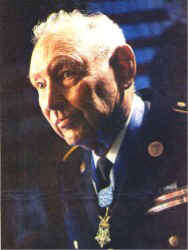
The following leadership lesson was circulated around our organization today.  I’ve read this before, was inspired, and moved on to the popular leadership theories and acronyms of more “modern” leader training.  But this is a story that deserves to be revisited often, it teaches lessons lacking in today’s leaders.  In an article published in the Warton Leadership Digest James E. Moschgat  (at the time a Colonel in Command of the 12th Operations Group, 12th Flying Training Wing, Randolph Air Force Base, Texas) writes about the squadron janitor at the Air Force Academy who was discovered to be a Congressional Medal of Honor winner.  The janitor was William John Crawford who earned a Medal of Honor while serving in Italy with the 36th Infantry Division but went on to become a leadership inspiration to Colonel Moschgat.  (more…)