“I didn’t join to be honored, I was just honored to serve” Staff Sergeant Clint Rutherford, two time Purple Heart recipient speaking at his retirement
Long Range Calendar

Leadership Definition: LTG(r) Russel Honoré
The art and science of influencing others to willingly follow you.
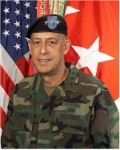
Leadership is more than influence. Influence without will leads to things being partially completed or poorly complete leading to even more problems. The real challenge of a leader is to inspire people to want to accomplish goals.
Inspire.
Ultimate Powers of Society
I know of no safe depository of the ultimate powers of the society but the people themselves, and if we think them not enlightened enough to exercise that control with a wholesome discretion, the remedy is not to take it from them but inform their discretion. Thomas Jefferson (quoted in The Making of The Atomic Bomb – Richard Rhoades)
Leadership: Balancing Influence and Control
In the exercise of leadership, leaders must skillfully balance the art of influence and the science of control to accomplish targeted goals. Too much control and subordinates become task driven, lose the will to exercise initiative, and constantly look to the leader for further instructions. On the other hand, influence without control builds highly motivated teams that lack cohesive focus towards a common goal. Balancing these two extremes challenges every leader’s ability to direct subordinates while allowing disciplines initiative. Successful leaders build focused and adaptive teams through:
- Vision
- Trust
- Understanding
- Initiative
- Communication
- Prudent Risk
More about Jethro, Moses’ Father-in-Law
In Exodus 18, Jethro counseled his son-in-law Moses about how he was leading Israel after they fled Egypt. But there is more depth to the story if you consider the rest of Jethro’s story:
- Jethro descended from Abraham by Keturah
- He was also called Reuel and possibly Hobab
- Is claimed by Islam as a revered prophet and a central figure in the Druze religion.
- According to Rabbinic literary traditions (Aggadah), Jethro was one of Pharaoh’s counselors, along with either Amalek or Balaam and Job, who gave evil counsel to throw the male Israelite children into the river (or he could have just fled to Midian instead)
- As pagan priest of Midian, he practiced idol worship to multiple gods including Baal He knew from experience when he proclaimed that God was greater than all other gods (Exodus 18:11)
- According to the translation of different Jewish rabbis, “Jethro rejoiced” (Exodus 18:9) either means he circumcised himself, accepted God, or got goosebumps
- Even before Moses, Aaron, or any other Israelite; Jethro offered benediction and sacrifice to God for the wonders He performed.
- He announced his arrival by shooting an arrow into Moses’ camp with a message attached (or he just sent a messenger depending on what tradition you believe).
- Most Rabbinical traditions claim that later in life Jethro abandoned idols and worshiped God as a convert to Judaism.
A Father’s (in-law) Influence

I’m blessed with a father who is a life-long influence to me. Every day the influence of my father is evident in my mannerisms, my life view, and my drive for excellence. Without him the very essence of who I am would not be and the success I’ve achieved only a hope. The influence I receive has been extended to my wife’s father since our marriage. I am blessed with two Christian men, both elders in the church, on which I rely on for wise counsel and example.
The reality of my blessings remind me of a moment in Moses life during which he was struggling with the burden of leading the Israelites, a burden he took solely on his own. It was during an exchange recorded in Exodus 18 between Moses and his father-in-law Jethro that the power of a father’s influence is realized. An influence that ultimately enabled Moses to endure the hardships of leading God’s people as they journeyed to the promised land. Jethro instructed Moses in some of the most profound leadership principles we use today, span of control and delegation. The salient verse in the exchange reads this way:
So Moses listened to his father-in-law and did all that he had said. (Exodus 18:24 NASB)
During this exchange Moses greets Jethro with great reverence, Jethro in turn praises Moses accomplishments, through God, before offering his counsel. Jethro’s advice was built on a relationship of mutual respect and honor without which the advice would likely have been disregarded.
Then Moses went out to meet his father-in-law, and he bowed down and kissed him; and they asked each other of their welfare and went into the tent. (Exodus 18:7 NASB)
You will notice as you read through the Biblical account that Moses’ father is never mentioned beyond his heritage from the Tribe of Levi. Rabbinical literature indicates his father was Amram who was “one of the long-lived saints whose life extended over many generations of Jews.” Maybe because Moses was raised by Pharaoh’s daughter he doesn’t seem to have been around for Moses. Modern cultures are creating families without fathers. I’m fortunate to not be included in that population but if you are be like Moses and seek advice from the one with whom you have that fatherly relationship. If you don’t have someone, seek them.
Fathers and children alike should consider the relationship between Moses and Jethro as a strong model:
1. Build a relationship of honor mutual respect before counsel is required
2. Fathers, do not hesitate to guide your children, even if they are adult leaders of thousands
3. Children, listen to your fathers and do what they say
4. Fatherly wisdom doesn’t always come from biological fathers.
5. Glorify God together for the blessings he provides
So Jethro said, “Blessed be the Lord who delivered you from the hand of the Egyptians and from the hand of Pharaoh, and who delivered the people from under the hand of the Egyptians. Now I know that the Lord is greater than all the gods; indeed, it was proven when they dealt proudly against the people.” (Exodus 18:10, 11 NASB)
Happy Father’s Day Dad and Lou David. You are a blessing to my life.
Guard against the lack of vision
 “You must guard constantly against those who lack vision. You must guard against the reactionary mind. Always cultivate and associate with persons of vision and with persons who believe that things are going to be better. When you do this, you take on the kind of vision, backed by the right kind of inspiration that you need if you are going to grow . . . .” Thomas Watson, Sr., 1874-1956, chairman and CEO of International Business Machines (IBM)
Sleep to be an Effective Leader
 I’m writing in the Washington National Airport early in the morning after a routine pre-flight night of restless sleep (about 2 hours worth). I’m tired and not very interested in doing much of anything. The culture in which I work places an informal value on early mornings, long work days, and late nights. It a badge of honor to say you’ve been awake for numbers of hours. My formal leadership training taught me to believe that a leader only needs four hours of sleep to be effective, a mantra I use to motivate myself late at night. Turns out, that’s all wrong.
Nicholas Hughes’ Good piece on How I Made Sleep a Priority – and Got More Productive opened my eyes (sorry for the pun) to what I had suspected was true, sleep matters…a lot. Its especially important to manage sleep as we age and deep sleep becomes more difficult. Hughes’ article as well as the 2006 Harvard Business Review article he references left me with some points to consider for my personal and corporate sleep management:
1. Sufficient, effective sleep makes helps you be more productive.
2. Insufficient sleep is hazardous to your health. The tragedies associated with driving while sleep impaired are well known. But we tend to thing we aren’t the ones at risk. However, The National Highway Traffic Safety Administration (NHTSA) estimates that each year drowsy driving is responsible for at least 100,000 automobile crashes, 71,000 injuries, and 1,550 fatalities anyway. Not only may the effects of sleep deprivation be irreversible, but chronic deprivation may lead to long-term health issues:
Many people gain weight as they age, too. Interestingly, chronic sleep restriction increases levels of appetite and stress hormones; it also reduces one’s ability to metabolize glucose and increases the production of the hormone ghrelin, which makes people crave carbohydrates and sugars, so they get heavier, which in turn raises the risk of sleep apnea, creating a vicious cycle. Harvard Business Review
3. Personal sleep management is deliberate. Instead of a catch-as-catch-can sleep plan, leaders should adhere to a strict sleep plan that is compatible with your work schedule and personal preferences. The American Academy of Sleep Medicine and the National Sleep Foundation recommend these tips on hacking effective sleep:
– maintain a regular sleep schedule
– establish a pre-sleep routine that prepares you for deep sleep
– create an environment that is comfortable and conducive to sleep
– exercise regularly but avoid vigorous exercise within a few hours of bedtime.
4. Corporate sleep management is deliberate. HBR recommends that companies formalize the importance of sleep and make productive sleep a part of the culture. Leaders can implement (and enforce) policies that contribute to the culture:
– limit hours worked to 12 per day and 60 per week. Only exceptionally allow 16 hour days
– require one day off per week, two is better
– avoid extreme flight schedules such as red-eye flights, single day trips, or complicated connections.
– allow a day of rest after an international flight
Sleep well!
The Commanders Role in Mission Command
The military is tasked with conducting highly complex operations in a life and death environment. Lessons learned since 1775 have evolved the way the military conducts mission command, an evolution that no amount of civilian theory can replicate. When reading military doctrine substitute military lexicon such as commander, mission, and warfighter with the civilian equivalent of your culture (chief executive officer, senior pastor, president; sales, spiritual growth, operations).
The commander is the central figure in mission command. To the commander comes the mission for the unit; in the commander resides the authority and responsibility to act and to lead so that the mission may be accomplished. In mission command, the commander must blend the art of command and the science of control, as he, supported by the staff, integrates all joint war fighting functions. (General Martin Dempsey, Chairman of the Joint Chiefs of Staff, Mission Command White Paper April 2012)
To be effective, from the outset of every mission the commander must:
1. Understand the problem
2. Envision the end state
3. Visualize the nature and design of the operations
4. Describe time, space, resources and purpose for the mission
5. Understand the intent of the mission
6. Clearly translate the intent to subordinates
7. Understand subordinate capabilities and trust (but verify) them to do it