Great leaders tell stories that create pictures in our minds and have emotional impact. Martin Luther King Jr., had a dream, not a strategy or a goal, and he showed us his dream, his picture of the future. People change when they see something visual (the vision) that touches their feelings, challenges their thinking, and incites actions. People may realize the need for change, but not do anything differently because they lack the passion to break out of the routines or habit patterns. The momentum of ‘how we’ve done things’ tends to make our future look like our past.
The ability to move people emotionally is a special gift. Few of us are born with it, but we can learn it. John P. Kotter
Don’t Invite Them In
“We cannot control the parade of negative thoughts marching through our minds. But we can choose which ones we will give our attention to. Picture your thoughts as people passing by the front of your home. Just because they’re walking by doesn’t mean you have to invite them in.” Gladys Edmunds
Rise From the Pain
“I am responsible. Although I may not be able to prevent the worst from happening, I am responsible for my attitude toward the inevitable misfortunes that darken life. Bad things do happen; how I respond to them defines my character and the quality of my life. I can choose to sit in perpetual sadness, immobilized by the gravity of my loss, or I can choose to rise from the pain and treasure the most precious gift I have – life itself.” – Walter Anderson
Leadership Lessons From A Janitor
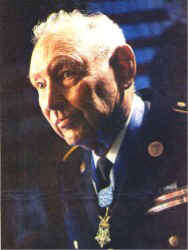 The following leadership lesson was circulated around our organization today. I’ve read this before, was inspired, and moved on to the popular leadership theories and acronyms of more “modern” leader training. But this is a story that deserves to be revisited often, it teaches lessons lacking in today’s leaders. In an article published in the Warton Leadership Digest James E. Moschgat (at the time a Colonel in Command of the 12th Operations Group, 12th Flying Training Wing, Randolph Air Force Base, Texas) writes about the squadron janitor at the Air Force Academy who was discovered to be a Congressional Medal of Honor winner. The janitor was William John Crawford who earned a Medal of Honor while serving in Italy with the 36th Infantry Division but went on to become a leadership inspiration to Colonel Moschgat. (more…)
Energy Follows Thought
“Energy follows thought ”
These three words were my take-away from three days of leadership training. Not that everything else wasn’t good information is was just more of the same from previous training events. I probably even heard these three words in training before but it never struck me the way they did that day.
What a simple rule for Christians. (more…)
Leader Poet
The Maxwell Leadership Bible counts the leadership style in the United States since World War II. There has been an evolution of leadership styles over the past sixty years which illustrates the change in the generations and a move to more internalized and inspired followers.
1. Military Commander. Leaders returned from the war emulating the leadership styles that won the war. They implemented a top down dictatorship style influencing from their position as a leader instead of inspiration.
2. Chief Executive Officer. CEOs lead through vision, goals and objectives passed to subordinates to follow. This is a top down leadership style which depends more on execution of a strict plan than
3. Coaches. Recently, leaders have viewed themselves as coaches of a team striving together for a win. In a sports obsessed society this works well because it focuses on the teams strengths and weaknesses forms
4. Poets. Currently more leaders are realizing the power of words and the inspirational value of empowering subordinates. A leader poet knows with a properly formed message subordinates will be empowered to creatively achieve the organizations goals. See also: Motivation 3.0
…all the people hung on [Jesus’] words (Luke 19:48 NIV
The Warrior’s Dream
A lot of what we do is protect ourselves…
We get locked into out roles and then we are not as effective as we can be, because we are holding onto people and things that are stifling us…
Letting go of what we are aware no longer serves us now, and walking into the unknown, is taking the next step as a warrior…It’s about being out front…moving beyond limits…there is an innate desire in all creatures to grow…
Yet in any type of growth and change something has to end for something new to begin…
The Path of the Warrior

A warrior is a person experienced in or capable of engaging in combat or warfare, literally or figuratively. Most leaders are figurative warriors, those who show great vigor, courage, or aggressiveness in everyday challenges. Merely acting like a warrior is insufficient, a warrior leader must become one by consistently walking the path of:
1. Integrity – honest and sincere
2. Impeccability – faultless character
3. Outrageous – excessively bold
4. Personal Power – ability to act
The leader shows that style is not more important than substance, and that creating an impression is not more potent than acting from one’s center – Lao Tzu (500BC)
Your Finest Hour
To every man there comes in his lifetime that special moment when he is figuratively tapped on the shoulder and offered a choice to do a very special thing, unique to him and fitted to his talents; what a tragedy if that moment finds him unprepared or unqualified for the work which would be his finest hour
– Sir Winston Churchill
A Daring Adventure or Nothing
Security is mostly a superstition. It does not exist in nature nor do the children of men as a whole experience it. Avoiding danger is no safer in the long run than outright exposure.
Life is either a daring adventure or nothing.
Helen Keller