CategoryLeadership

The Transitional Leadership of General George C. Marshall

Note:  This article was orginally published in the Texas Military Forces publication The Dispatch

As overseas contingencies and operations lessen for our current military forces, many service members returning home may not only question his/her own future career, but that of the profession. Common questions may include a desire for one to predict the types of future conflicts or focus on overall costs of maintaining the most expensive defensive strategy in the world. Regardless of the era or generation, post-war transitions result in leaders providing tough answers to difficult questions, while keeping the well-being of the country a top priority. During these times of uncertainty, the U.S. needs strong leaders across all levels who adhere to attributes necessary to navigate these transitions. Through monumental achievements, ethical qualities and an extraordinary philosophy and managerial style, Gen. George C. Marshall serves as a model of such a leader.

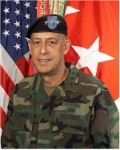
General_George_C__Marshall,_official_military_photo,_1946_JPEGBefore discussing the attributes and competencies contributing to revered success, it is important to provide some background and insight to the leader dubbed “a man for all seasons.” A shy and reserved youth and mediocre student at best, it was a love for history and a desire to seek advanced education at the Virginia Military Institute (VMI) that launched his career. Fast forward to the day Marshall became the U.S. Army Chief of Staff, at which time, Germany invaded Poland and ushered in World War II. Over a three-year period, Marshall transitioned the U.S. Army from 189,000 outmoded and ill-equipped soldiers into the 8,000,000-soldier force that won the war.

Following the war and its victories, he broke through parochial services plans and rebuilt the total force that included maintaining the National Guard as an integral force, part of America’s first line of defense. This decision is one we benefitted from during a decade of war in Iraq and Afghanistan. As secretary of state and the orchestrator of the so-called Marshall Plan (European Recovery Plan), he helped rebuild European economies and stem the spread of communism. In fact, Marshall is one of a few incredible leaders in our nation’s history whose attributes and competencies are worth emulating in today’s ever-changing environment. (more…)
Decisions – Leadership Lessons from D-Day

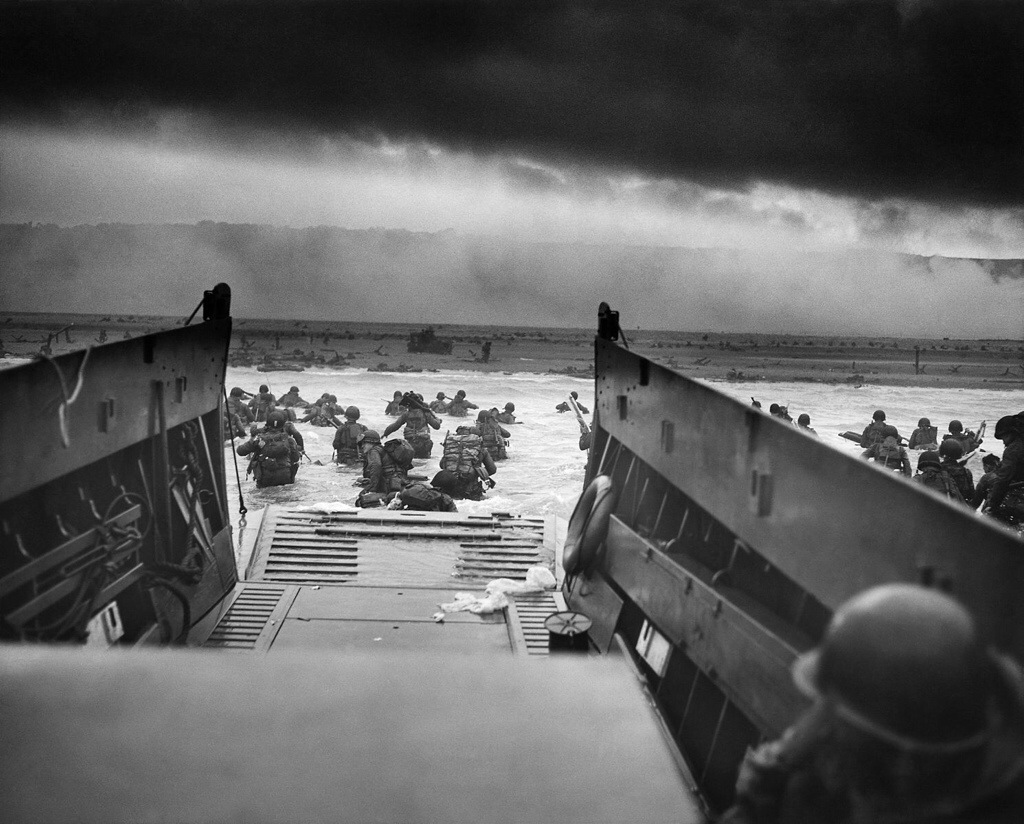
D-day arrived on June 6, 1944 and the cross channel assault, part of Operation Overlord, began and changed the course of World War II. Because no operation ever goes as planned, the leaders that day were faced with a barrage of unimaginable decisions in order reduce the loss of life yet protect the goals of the operation.

20140606-201602-72962546.jpg

During his address to the House of Commons that same day, Winston Churchill expressed his confidence in the Supreme Commander’s abilities. Addressing the weather and other unpredictable aspects of both the airborne and amphibious landing operations he said:

General Eisenhower’s courage is equal to all the necessary decisions that have to be taken in these extremely difficult and uncontrollable matters.

These decision amid extremes were likely what General Eisenhower had in the forefront of his mind when he proclaimed that

When you come right down to it, leadership is, of course, being exerted all of the time in the capacity of boosting morale, confidence, and all that, but leadership is most noticeable when tough decisions have to be made…. But making decisions is the essence of leadership; that is, handling large problems whether at war or peace. (As recorded in a personal interview by Edgar P. Puryear, May 2, 1962)

These decisions are the unglamorous part of being a leader the public rarely sees. Even though they may become routine, even in rough situations, decisions are rarely made between two clear choices.

The choice of timing the invasion is a good example of huge decisions made on unclear information. The allied forces had just a few days each month when all of the tide and moonlight conditions were optimal for the landings. However, when the first dates arrived the weather was poor. With assurances but not guarantees the conditions would improve General Eisenhower made the decision to commence operations, setting D-day to the 6th of June. Had he decided to delay (a very safe decision) the next window of opportunity was two weeks away (the weather was worse on those days). To accentuate how unclear the weather predictions were, the Germans believed the weather was too poor for operations making allied attack improbable. So most leaders were gone and many troops were given leave.

The leadership lessons from D-day:
1. Leadership is difficult work.
2. Decisions making is the essence of leadership
3. Decisions are never clear
4. Leaders are lonely – ultimately only one person decides

Leadership is hard

I learned that leadership is hard.  Leadership sounds easy in the books, but it is quite difficult in real life.  I learned that leadership is difficult because it is a human interaction and nothing, nothing is more daunting, more frustrating more complex than trying to lead men and women in tough times.

I learned that you won’t get a lot of thanks in return.  I learned that you shouldn’t expect it.

I learned that the great leaders know how to fail.  If you can’t stomach failure, then you will never be a great leader.

Admiral William Harry McRaven, US Special Operations Command, in a speech at the United States Military Academy, January 18, 2014


The Army Leader is a Teaching Leader

Over a decade of war has changed the fabric of the U.S. armed forces.  Short mobilization cycles and changing theater tactics necessitated the development of a learning culture within the organizations.  This learning culture, however, is fundamentally NOT the culture that has sustained our premier forces throughout our history.  As the armed forces move into a garrison environment and resources diminish, it is time for the culture to shift back to what we fundamentally are…a teaching culture.

General Colin Powell, in his autobiography It Worked for Me: In Life and Leadership, explains that he has been a professional speaker, trainer, and teacher his entire adult career.  He explains

From my first day in my unit as an Army officer, I had to speak to and teach troops.

General Powell built his success on the enduring Army culture where leaders teach troops and other leaders.  They not only learn they pass knowledge on.  Instilling the desire to improve and learn is the important part of any the learning culture; A teaching organization further infuses learning with the culture of passing it on to others.  Noel Tichy, author of the Leadership Engine puts it this way:

(Organizations) that consistently outperform competitors (have) moved beyond being learning organizations to become teaching organizations….That’s because teaching organizations are more agile, come up with better strategies, and are able to implement them more effectively…. Teaching organizations do share with learning organizations the goal that everyone continually acquire new knowledge and skills. But to do that, they add the more critical goal that everyone pass their learning on to others…. In a teaching organization, leaders benefit just by preparing to teach others. Because the teachers are people with hands-on experience within the organization—rather than outside consultants—the people being taught learn relevant, immediately useful concepts and skills. Teaching organizations are better able to achieve success and maintain it because their constant focus is on developing people to become leaders.

In short, leaders train leaders. (more…)

On Hard Work

I decided long ago . . . to define my own destiny and refuse to have it defined for me. I fully understand that trying hard doesn’t always guarantee success. Success is often a fluky thing, dependent as much on luck and favor as on hard work. But while hard work may not guarantee success, not working hard almost always guarantees failure.

Trying hard and working hard is its own reward. It feeds the soul. It affirms your will and your power. And it radiates from you, lighting the way for all those who see you.

Charles M. Blow, American journalist and columnist for the New York Times

Honored to serve

“I didn’t join to be honored, I was just honored to serve” Staff Sergeant Clint Rutherford, two time Purple Heart recipient speaking at his retirement

Leadership Definition: LTG(r) Russel Honoré

The art and science of influencing others to willingly follow you.

20130725-095954.jpg

Leadership is more than influence. Influence without will leads to things being partially completed or poorly complete leading to even more problems. The real challenge of a leader is to inspire people to want to accomplish goals.

Inspire.

Ultimate Powers of Society

I know of no safe depository of the ultimate powers of the society but the people themselves, and if we think them not enlightened enough to exercise that control with a wholesome discretion, the remedy is not to take it from them but inform their discretion. Thomas Jefferson (quoted in The Making of The Atomic Bomb – Richard Rhoades)

Leadership: Balancing Influence and Control

In the exercise of leadership, leaders must skillfully balance the art of influence and the science of control to accomplish targeted goals.  Too much control and subordinates become task driven, lose the will to exercise initiative, and constantly look to the leader for further instructions.  On the other hand, influence without control builds highly motivated teams that lack cohesive focus towards a common goal.  Balancing these two extremes challenges every leader’s ability to direct subordinates while allowing disciplines initiative.  Successful leaders build focused and adaptive teams through:

  1. Vision
  2. Trust
  3. Understanding
  4. Initiative
  5. Communication
  6. Prudent Risk