CategoryGrowth

What Do You Stand On When the Ground Keeps Shifting?

We live in a moment where every headline insists you choose a side, but none of them offer a place to stand. You can feel it: people are angrier, louder, more certain of things they’ve barely examined. You see generations drifting without a sense of direction, pulled by whatever current is strongest that week. And you sense the deeper problem a culture hungry for meaning but allergic to the work required to build it.

So ask yourself: what guides your choices when the noise drowns out your better judgment?

If you’re honest, you know the traditional anchors aren’t holding like they once did. Institutions that once offered clarity now trade in slogans. Politics demands your loyalty but rarely earns your trust. Even religious communities, once sources of solace and moral grounding, often fracture along the same lines of suspicion and intolerance as the culture they are supposed to transcend. People of faith feel cornered; people outside faith feel alienated.

And somewhere in all of this, you are expected to navigate your life with wisdom.

But where are you supposed to learn it?

We tell young people to “be themselves,” but never show them how to build a self “themself” worth being. We tell them to “follow the science,” but never teach them the discipline of thinking. We tell them to “make a difference,” but rarely equip them with the courage or clarity required to act in a world that pushes conformity over conviction.

What results is exactly what you see: generations without direction, individuals without internal ballast, a culture without a shared vocabulary for what a good life even is.

This drift is not caused by a lack of intelligence. It’s caused by a lack of philosophy (love of wisdom). Not the academic kind buried in footnotes, but the lived kind that steadies your hand and sharpens your conscience. A philosophy that helps you interpret the world, discern truth from illusion, and act with integrity rather than impulse. A philosophy marked by critical thinking guided by steadfast principles.

You need something practical. Something grounded. Something that does not demand blind loyalty but invites clear thinking. Something that refuses both the chaos of relativism and the rigidity of dogma. Something that honors individual responsibility while insisting that your life leaves a mark on the world around you.

Most importantly, you need a philosophy that can be practiced — daily, quietly, consistently — in the choices you make, the courage you cultivate, and the stewardship you offer to whatever corner of the world has been entrusted to you.A way of living that belongs to no institution, no party, no faction — only to the individual willing to think, to act, and to grow.

In a culture drifting in every direction at once, clarity is not a luxury.

Clarity is your compass.

More to follow….
Leadership Development in one sentence

Jesus called his first apostles by saying: “Follow Me, and I will make you become fishers of men.” (Mark 1:14 NASB).  Encapsulated within this sentence is a perfect leadership development model. 

Foremost in His development model for Simon Peter and Andrew was the call to both physically follow Him and to emulate His teachings and example (Jews like Peter and Andrew understood that to follow a Rabbi was to emulate and learn from him).  Like Jesus, leaders  are called to model the behavior of a leader disciple for those developing in their faith to emulate. 

Second in Jesus’ development model is the assignment of responsibility and goals. Jesus took upon Himself the responsibility of developing His apostles into the Spiritual leaders when he said, “I will.” His promise was to make them become leaders.  Some people are born with some physical and mental traits of a leader, but no one is born with a complete set of leadership traits (who a leader is) and skills (what a leader does).  Every single person must “become” or develop into a leader.

Finally, Jesus called his apostles to be “fishers of men (people).” The fishermen who heard this word picture understood Jesus was calling them to become a leader who could “catch” or influence people to the gospel in His name.  This is the essence of leadership, influencing people toward a higher goal.

Spiritual leaders in the church are responsible for finding and calling future generations of leaders. A responsibility that extends to purposefully maturing young leaders through mentorship and the modeling of strong traits and skills for them to emulate. Echoing the words of Jesus, leaders in the church must say to potential future leaders, “Follow my example and I will make you a leader of people.”

Every time I study Biblical writings…

“In the high country of the mind one has to become adjusted to the thinner air of uncertainty, and to the enormous magnitude of questions asked, and to the answers proposed to these questions. The sweep goes on and on and on so obviously much further than the mind can grasp one hesitates even to go near for fear of getting lost in them and never finding one’s way out.” Robert M. Pirsig, Zen and the Art of Motorcycle Maintenance

Learn to Learn and Think On Your Own

Lessons from the U.S. Army War College:

Rote learning is good for beginning learning on basic academic subjects, but rote learning fails with time and increased complexity of problem. There comes a time in every life when a person must learn to think critically and explore new ideas without the goading of a teacher, boss, or test. The person who fails to achieve this state is destined to struggle when the inevitable wicked problems of life and occupation arise.

20120621-183737.jpg

“During your course here no one is going to compel you to work, for the simple reason that a man who requires to be driven is not worth the driving…Thus you will become your own students and until you learn how to teach yourselves, you will never be taught by others.” Major General J. F. C. Fuller

Danger Opportunity

“ . . . the Chinese symbol for crisis is the merging of two signs, one meaning ‘danger’ and the other meaning ‘opportunity.’ A crisis has the potential to transform or destroy. And what is the tipping point toward transformation in the face of crisis? The choice is either to cower in fear or to step forward with courage.”

— Dr. Dan B. Allender, American author, educator, therapist

Real Leadership

“We need to believe in ourselves and our future but not to believe that life is easy.  Life is painful and rain falls on the just.  Leaders must help us see failure and frustration not as a reason to doubt ourselves but a reason to strengthen resolve…Don’t pray for the day we finally solve our problems.  Pray that we have freedom to continue working on the problems the future will never cease to throw at us.”

John W. Garner On Leadership (New York Free Press 1993), 195, xii


Your Real Life

The great thing, if one can, is to stop regarding all unpleasant things as interruptions of ones “own” or “real” life.  The truth is of course that what one calls the interruptions are precisely one’s real life – the life God is sending one day by day. – C.S. Lewis

Leadership Lessons From A Janitor

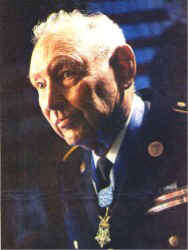
The following leadership lesson was circulated around our organization today.  I’ve read this before, was inspired, and moved on to the popular leadership theories and acronyms of more “modern” leader training.  But this is a story that deserves to be revisited often, it teaches lessons lacking in today’s leaders.  In an article published in the Warton Leadership Digest James E. Moschgat  (at the time a Colonel in Command of the 12th Operations Group, 12th Flying Training Wing, Randolph Air Force Base, Texas) writes about the squadron janitor at the Air Force Academy who was discovered to be a Congressional Medal of Honor winner.  The janitor was William John Crawford who earned a Medal of Honor while serving in Italy with the 36th Infantry Division but went on to become a leadership inspiration to Colonel Moschgat.  (more…)