CategoryLeadership

What Do You Stand On When the Ground Keeps Shifting?

We live in a moment where every headline insists you choose a side, but none of them offer a place to stand. You can feel it: people are angrier, louder, more certain of things they’ve barely examined. You see generations drifting without a sense of direction, pulled by whatever current is strongest that week. And you sense the deeper problem a culture hungry for meaning but allergic to the work required to build it.

So ask yourself: what guides your choices when the noise drowns out your better judgment?

If you’re honest, you know the traditional anchors aren’t holding like they once did. Institutions that once offered clarity now trade in slogans. Politics demands your loyalty but rarely earns your trust. Even religious communities, once sources of solace and moral grounding, often fracture along the same lines of suspicion and intolerance as the culture they are supposed to transcend. People of faith feel cornered; people outside faith feel alienated.

And somewhere in all of this, you are expected to navigate your life with wisdom.

But where are you supposed to learn it?

We tell young people to “be themselves,” but never show them how to build a self “themself” worth being. We tell them to “follow the science,” but never teach them the discipline of thinking. We tell them to “make a difference,” but rarely equip them with the courage or clarity required to act in a world that pushes conformity over conviction.

What results is exactly what you see: generations without direction, individuals without internal ballast, a culture without a shared vocabulary for what a good life even is.

This drift is not caused by a lack of intelligence. It’s caused by a lack of philosophy (love of wisdom). Not the academic kind buried in footnotes, but the lived kind that steadies your hand and sharpens your conscience. A philosophy that helps you interpret the world, discern truth from illusion, and act with integrity rather than impulse. A philosophy marked by critical thinking guided by steadfast principles.

You need something practical. Something grounded. Something that does not demand blind loyalty but invites clear thinking. Something that refuses both the chaos of relativism and the rigidity of dogma. Something that honors individual responsibility while insisting that your life leaves a mark on the world around you.

Most importantly, you need a philosophy that can be practiced — daily, quietly, consistently — in the choices you make, the courage you cultivate, and the stewardship you offer to whatever corner of the world has been entrusted to you.A way of living that belongs to no institution, no party, no faction — only to the individual willing to think, to act, and to grow.

In a culture drifting in every direction at once, clarity is not a luxury.

Clarity is your compass.

More to follow….

Leadership Development in one sentence

Jesus called his first apostles by saying: “Follow Me, and I will make you become fishers of men.” (Mark 1:14 NASB).  Encapsulated within this sentence is a perfect leadership development model. 

Foremost in His development model for Simon Peter and Andrew was the call to both physically follow Him and to emulate His teachings and example (Jews like Peter and Andrew understood that to follow a Rabbi was to emulate and learn from him).  Like Jesus, leaders  are called to model the behavior of a leader disciple for those developing in their faith to emulate. 

Second in Jesus’ development model is the assignment of responsibility and goals. Jesus took upon Himself the responsibility of developing His apostles into the Spiritual leaders when he said, “I will.” His promise was to make them become leaders.  Some people are born with some physical and mental traits of a leader, but no one is born with a complete set of leadership traits (who a leader is) and skills (what a leader does).  Every single person must “become” or develop into a leader.

Finally, Jesus called his apostles to be “fishers of men (people).” The fishermen who heard this word picture understood Jesus was calling them to become a leader who could “catch” or influence people to the gospel in His name.  This is the essence of leadership, influencing people toward a higher goal.

Spiritual leaders in the church are responsible for finding and calling future generations of leaders. A responsibility that extends to purposefully maturing young leaders through mentorship and the modeling of strong traits and skills for them to emulate. Echoing the words of Jesus, leaders in the church must say to potential future leaders, “Follow my example and I will make you a leader of people.”

Making Decisions is the Essence of Leadership

““When you come right down to it, leadership is, of course, being exerted all the time in the capacity of boosting morale, confidence and all that, but leadership is most noticeable when tough decisions finally have to be made. This is the time when you get conflicting advice and urgent advice of every kind. Now this is the kind of leadership that’s often concealed from the public.… But making decisions is of the essence in leadership—that is, handling large problems whether or not you are at war or at peace. When you make these decisions it is not done with any reaching for the dramatic. It is almost everyday and commonplace. You reach a conclusion based upon the facts as you see them, the evaluations of the several factors as you see them, the relationship of one fact to another, and, above all, your convictions as to the capacity of different individuals to fit into these different places. You come to a decision after you’ve taken all these things into consideration. Then you decide and say, ‘That’s what we’ll do.’” General Dwight D. Eisenhower

— American Generalship: Character Is Everything: The Art of Command by Edgar Puryear

Self-Leadership

Without mature self-leadership competencies, leaders face an increasingly unsustainable environment. The stress of growing job complexity, difficult decisions, limited time, information overload, the high stakes of negative consequences (this list goes on for a while) combined with the attention required to maintain family, friends, church, hobbies (this list also goes on) can be impossible to manage.  UNLESS you understand that self-leadership comes before all other levels of leadership (direct-, organizational-, strategic-) and have ingrained the self-leadership disciplines you need to sustain the leadership environment.

Self-Leadership is a continual cognitive discipline that strengthens the spiritual core and builds mental, physical, and emotional wellness to maximize performance and happiness* to reach personal and organizational objectives.

*The Stoics defined happiness (eudaimonia) more deeply as “flourishing” and “living in agreement with your purpose (nature).” Contrast with “hapless

On Leadership Vision

“Questions of implementation are of no consequence until the vision can be imagined. The imagination must come before implementation. Our culture is competent to implement almost anything and to imagine almost nothing.”

Walter Brueggemann, American Protestant Old Testament scholar and theologian

It’s about what you show them

[Your subordinates] will take queue from you: You show loyalty they learn loyalty; you show them it’s about the work it will be about the work; you show them some other kind of game then that’s the game they’ll play….there will come a day when you will have to decide if it’s about you or about the work. Lieutenant Daniels, The Wire 

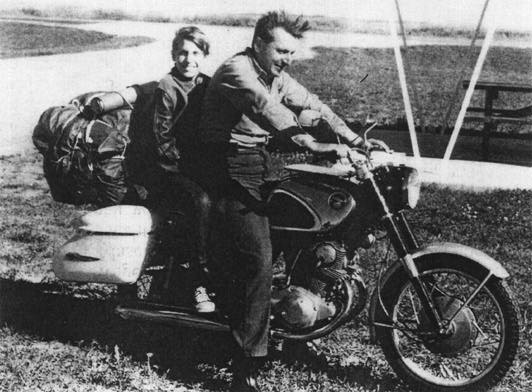
Favorite quotes from Zen and the Art of Motorcycle Maintenance: An Inquiry into Values – Robert M. Pirsig

“We want to make good time, but for us now this is measured with emphasis on “good” rather than “time” and when you make that shift in emphasis the whole approach changes.”

“The truth knocks on the door and you say, ‘Go away, I’m looking for the truth,’ and so it goes away. ”

“Sometimes it’s a little better to travel than to arrive”

“In the high country of the mind one has to become adjusted to the thinner air of uncertainty, and to the enormous magnitude of questions asked, and to the answers proposed to these questions….one hesitates even to go near for fear of getting lost in them and never finding one’s way out…. (From above) The sweep goes on and on and on so obviously much further than the mind can grasp.”

“You are never dedicated to something you have complete confidence in. No one is fanatically shouting that the sun is going to rise tomorrow”

“To live only for some future goal is shallow. It’s the sides of the mountain which sustain life, not the top.”

“For every fact there is an infinity of hypotheses.”

“The past cannot remember the past. The future can’t generate the future. The cutting edge of this instant right here and now is always nothing less than the totality of everything there is.” [The ancient greeks] saw the future as something that came upon them from behind their backs with the past receding away before their eyes.”

“The place to improve the world is first in one’s own heart and head and hands, and then work outward from there.”

“‘Man is the measure of all things.’ Yes….The Quality which creates the world emerges as a relationship between man and his experience. He is a participant in the creation of all things.”

Every time I study Biblical writings…

“In the high country of the mind one has to become adjusted to the thinner air of uncertainty, and to the enormous magnitude of questions asked, and to the answers proposed to these questions. The sweep goes on and on and on so obviously much further than the mind can grasp one hesitates even to go near for fear of getting lost in them and never finding one’s way out.” Robert M. Pirsig, Zen and the Art of Motorcycle Maintenance

Hierarchical Management Explained by Dr. Suess


Did I Ever Tell You How Lucky You Are

Oh, the jobs people work at!
Out west near Hawtch-Hawtch
there’s a Hawtch-Hawtcher Bee-Watcher.
His job is to watch…
is to keep both his eyes on the lazy town bee.
A bee that is watched will work harder, you see.
Well… he watched and he watched.
But, in spite of his watch,
that bee didn’t work any harder. Not mawtch.

So then somebody said,
“Our old bee-watching man
just isn’t bee-watching as hard as he can.
He ought to be watched by another Hawtch-Hawtcher!
The thing that we need
is a Bee-Watcher-Watcher!”

Well…

The Bee-Watcher-Watcher watched the Bee-Watcher.
He didn’t watch well. So another Hawtch-Hawtcher
had to come in as a Watch-Watcher-Watcher!
And today all the Hawtchers who live in Hawtch-Hawtch
are watching on Watch-Watcher-Watchering-Watch,
Watch-Watching the Watcher who’s watching that bee.

You’re not a Hawtch-Watcher. 
You’re lucky, you see!
Dr Suess, 1973

One Life

“We have two lives, and the second begins when we realize we only have one.” Confucius