
Army Leadership Definition
Leadership is the process of influencing people by providing purpose, direction, and motivation to accomplish the mission and improve the organization.
An Army leader is anyone who by virtue of assumed role or assigned responsibility inspires and influences people to accomplish organizational goals. Army leaders motivate people both inside and outside the chain of command to pursue actions, focus thinking and shape decisions for the greater good of the organization.
As defined in Army Doctrine Publication (ADP) 6-22, Army Leadership August 2012
The Commander’s (Leader’s) Intent
 Without a clear understanding of what the boss wants, organizations will inevitably fail to achieve it. Without the gift of mind reading, success depends on the boss clearly communicating what he wants. This holds true regardless of the nature of the organizations, its size or purpose. Church leaders, business executives, managers, and heads of families could take a lesson from an enterprise that literally depends on communicating intent to save lives.
The military understands that the absence of a clear understanding of the commander’s intent, for any given operation, could result in the unnecessary death of people. The U.S. Army’s manual on the operations process emphasizes this by connecting the commander’s intent to everything about an operation including how the staff plans operations, the disciplined initiative of subordinate commanders when the plan changes, and the level of risk that is appropriate to achieve the ends state.
The commander’s intent is a clear and concise expression of the purpose of the operation and the desired military end state that supports mission command, provides focus to the staff, and helps subordinate and supporting commanders act to achieve the commander’s desired results without further orders, even when the operation does not unfold as planned (ARDP 5-0, Pg 1-5 )
Several principles govern the creation of intent:
- Commanders (substitute any leader as necessary) must have a vision (end state)
- Commanders must create and communicate intent by describing the components of their vision on their own. I have been in too many planning meetings where the boss asks the staff to come up with the intent; this is a responsibility that cannot be delegated.
- The intent must be concise and easy to remember, the shorter the better.
- The intent should be understood two levels below the commander. In Army terms, a brigade commander will frame intent so that a company commander understands it.
- Intent will provide the framework for action, shared understanding and focus until the end state is achieved
“The very essence of leadership is [that] you have a vision. It’s got to be a vision you articulate clearly and forcefully on every occasion. You can’t blow an uncertain trumpet.”— Theodore Hesburgh
With these principles in place, a commander can frame their intent using three components: Expanded purpose statement, list of key tasks, and statement of end state
- Expanded Purpose. The Army communicates purpose, or why an action is taken, in the mission statement of an operation order. The expanded purpose gives the context beyond why an action is planned by addressing the strategic implications to success and how it affects other parts of the organization.
- Key tasks. A brief list of activities required to achieve the desired end state. Staffs use the key task list to ensure the development of suitable and acceptable plans. When situations changes and significant opportunities present themselves, subordinates use the key tasks to focus their efforts to take initiative and achieve the end state.
- End state. Similar to a vision statement, the end state statement in more descriptive in describing the conditions that will exist when the organization has successfully met the commander’s intent. Write the description of end state in present tense as if everything has been actualized and the organization has achieved the best possible outcome.
The Essence of Leadership
“The very essence of leadership is [that] you have a vision. It’s got to be a vision you articulate clearly and forcefully on every occasion. You can’t blow an uncertain trumpet.”— Theodore Hesburgh
The Kitchen Garden Plan

The Drop-in and Catch-up Synergy
Every office has a ritual that is as important to the health of the organization as the business meeting…the ritual of dropping in on and catching up with co-workers and bosses following a lengthy holiday. I was reminded of this today as I returned to work following a week off for Christmas and the New Year celebrations. My goals were to finalize my calendar for the coming weeks and clear my desk of the administrative tasks before meetings began again. What happened was a stream of unscheduled visitors leading with the question, “How was your Christmas?” Virtually none of my goals for the day were accomplished.
Because my personality is to focus on my goals the interruptions were not welcome. Mid-morning I realized that leaders don’t manage with processes and goals, they manage with people. The post-holiday ritual is necessary to reestablish the bonds and thinking that create synergistic teams.
Synergy — the bonus that is achieved when things work together harmoniously. Mark Twain
The take away, schedule at least a half-day following a holiday for social protocols. Perhaps a deliberate social event (such as a team breakfast) would fulfill the social cues that human nature demands in a more efficient manner while enabling the team of reestablish the synergy required for an organizational to excel.
Synergy is the highest activity of life; it creates new untapped alternatives; it values and exploits the mental, emotional, and psychological differences between people. Stephen Covey
Sermon Audio: The Ethiopian Eunuch: The Rest of the Story
Acts 8:26-39
Bible Class Audio: God’s Will and Purpose Revisited
And this is the will of him who sent me, that I shall lose none of all those he has given me, but raise them up at the last day. For my Father’s will is that everyone who looks to the Son and believes in him shall have eternal life, and I will raise them up at the last day.” (John 6:39, 40 NIV)
It’s Critical to Think Critically
Lessons from the U.S. Army War College:
God created in us the ability to think, reason, and decide (free will). As we grow from infant to adolescent that ability both matures but never reaches our full potential. Our reasoning naturally narrows as our point of view is informed by our culture, religion, and parents to name just a few. Maturity brings complex problems which requires reasoning outside of our point of view. However, few recognize their point of view has been narrowed by their personal biases and in informed assumptions. To move beyond narrow thinking one must deliberately Learn and practice critical thinking.
 First of all, not all problems require critical thinking. In fact most decisions are automatic (should I wear my seat belt) or are a choice between few choices. However, when problems are complex, have huge implications, or you realize strong personal views might lead to a poor decision then critical thinking should be used.
We need to first define the problem. If I had one hour to save the world, I would spend 59 minutes defining the problem and one minute finding solutions. Dr. Albert Einstein
Learn to Learn and Think On Your Own
Lessons from the U.S. Army War College:
Rote learning is good for beginning learning on basic academic subjects, but rote learning fails with time and increased complexity of problem. There comes a time in every life when a person must learn to think critically and explore new ideas without the goading of a teacher, boss, or test. The person who fails to achieve this state is destined to struggle when the inevitable wicked problems of life and occupation arise.
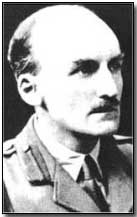
“During your course here no one is going to compel you to work, for the simple reason that a man who requires to be driven is not worth the driving…Thus you will become your own students and until you learn how to teach yourselves, you will never be taught by others.” Major General J. F. C. Fuller